




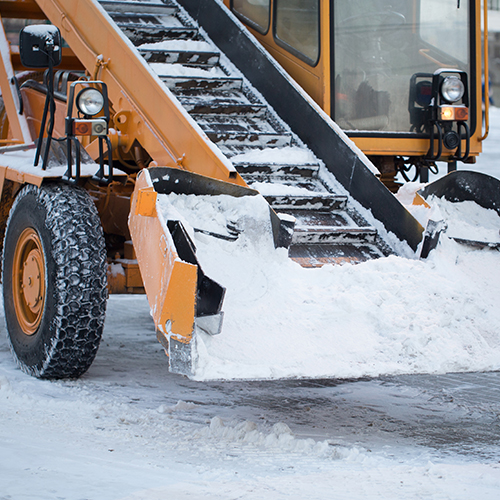
SNOW PUSHER MAINTENANCE GUIDE
Snow pushers work in demanding conditions, repeatedly contacting pavement, packed snow, ice, curbs, and uneven surfaces throughout the winter. Routine maintenance can help reduce unexpected downtime, promote consistent clearing performance, and identify worn components before they cause additional damage.
Whether you operate a snow pusher on a skid steer, compact track loader, or wheel loader, inspections should be performed before the season and regularly during periods of heavy use. McCann Industries can help contractors and snow-removal professionals maintain their equipment with replacement wear parts, service support, and equipment solutions for winter operations.
WHAT TO INSPECT ON YOUR SNOW PUSHER
A snow pusher should be inspected regularly for visible damage, loose components, and excessive wear. Cutting edges and shoes deserve particular attention because they continually contact the operating surface. As these components wear, clearing performance can decline and other portions of the pusher may be exposed to unnecessary contact with the ground.
Trip springs and related mechanisms should also be inspected according to the manufacturer's recommendations. These systems are designed to help the pusher respond when it encounters certain obstacles, so damaged, excessively worn, or improperly functioning components should be addressed before continued operation. Hardware can loosen under repeated vibration and impact, making bolts, fasteners, mounting points, and attachment connections another important part of routine maintenance. Key snow pusher inspection points include:
- Cutting edges: Check for uneven wear, cracks, damage, and excessive material loss.
- Shoes: Inspect for wear and confirm they are properly positioned and adjusted for the application.
- Trip springs: Look for visible damage, excessive corrosion, or other signs that the trip mechanism needs attention.
- Hardware: Check bolts, nuts, fasteners, pins, and mounting points for looseness, damage, or missing components.
- Wear parts: Inspect replaceable components regularly and address excessive wear before surrounding parts are affected.
- Hydraulic components: If equipped, inspect hoses, fittings, cylinders, and connections for leaks or damage.
- Pusher structure: Look over the moldboard, side panels, welds, frame, and attachment points for cracks, bending, or impact damage.
CUTTING EDGES, SHOES & WEAR PARTS
Cutting edges are among the most frequently worn components on a snow pusher. Allowing an edge to wear too far can reduce clearing effectiveness and potentially expose more expensive structural components to pavement contact. Checking wear frequently during high-use periods makes it easier to replace the edge before it reaches that point.
Shoes help control how the pusher contacts the operating surface and can experience significant wear of their own. Their condition and adjustment should be checked along with the cutting edge, particularly when moving between different surfaces or operating conditions.
Other wear components should be treated the same way: replacement is generally easier to plan before a component reaches the end of its usable life. Keeping common wear parts available during snow season can also reduce the amount of time equipment remains out of service when replacement becomes necessary.
MAINTAIN TRIP SPRINGS, HARDWARE & ATTACHMENT POINTS
Snow pushers are exposed to repeated vibration, impact, and changing loads. Over time, these forces can affect springs, fasteners, pins, welds, and mounting components. A quick inspection before operation can identify loose or damaged parts before they become a larger repair.
Operators should pay attention to changes in how the pusher performs. Uneven scraping, unusual movement, excessive vibration, visible leaning, difficulty connecting the attachment, or a trip mechanism that does not appear to operate normally may indicate that maintenance is needed.
Always follow the snow pusher manufacturer's specifications for spring adjustment, hardware torque, cutting-edge replacement, lubrication, and other maintenance procedures. Using the correct replacement parts and service procedures helps ensure the attachment continues to operate as intended.
PREPARE YOUR SNOW PUSHER BEFORE & AFTER THE SEASON
Preseason maintenance gives contractors time to replace worn components and address repairs before the first major snowfall. Inspect the complete pusher, replace parts approaching their wear limits, and verify that the attachment is compatible with and securely connects to the carrier machine.
Maintenance should continue throughout the winter rather than waiting until the end of the season. After heavy storms or demanding clearing jobs, inspect high-wear areas for new damage. At the end of winter, cleaning and inspecting the attachment before storage can help identify repairs that should be completed before the next snow season. A seasonal maintenance routine should include:
- Inspecting and replacing worn cutting edges and shoes
- Checking trip springs and trip mechanisms
- Tightening and replacing damaged or missing hardware
- Examining pins, mounting points, welds, and structural components
- Inspecting hydraulic components on equipped attachments
- Cleaning away accumulated salt, dirt, and debris
- Completing necessary repairs before long-term storage
- Following manufacturer recommendations for lubrication and storage
WHY CHOOSE McCANN INDUSTRIES FOR SNOW PUSHER PARTS & SERVICE?
Snow removal schedules leave little room for equipment downtime. McCann Industries helps contractors prepare for winter and respond to equipment needs throughout the season with knowledgeable support, replacement parts, construction equipment service, and rental solutions.
Instead of waiting for a worn cutting edge, damaged shoe, or other component to interrupt a snow-removal job, customers can work with McCann Industries to identify maintenance needs and find the appropriate parts or service solution. If equipment downtime or increased snowfall creates a temporary gap in your fleet, McCann can also help with rental equipment for seasonal and project-specific needs.
From preseason preparation to midwinter repairs, McCann Industries provides a single resource for keeping snow-removal equipment ready for demanding conditions. Contact McCann Industries for help with snow pusher wear parts, construction equipment service, rental equipment, and other winter equipment needs.