



COMPACTION EQUIPMENT GUIDE: PLATE COMPACTOR, ROLLER, OR RAMMER?
Proper compaction creates a stable base for roads, foundations, sidewalks, landscaping, and other construction projects. Choosing the right machine helps increase soil density, reduce future settling, and produce a longer-lasting finished surface.
However, not every compactor is designed for the same material or application. Plate compactors, rammers, and rollers apply force differently and perform best in different working conditions.
McCann Industries offers compaction equipment from Wacker Neuson, Husqvarna, BOMAG, and DEWALT. Our team can help contractors, municipalities, and construction professionals match the right equipment to the material, project size, and jobsite conditions.
WHY PROPER COMPACTION MATTERS
Soil, gravel, and asphalt contain pockets of air that can cause a surface to shift or settle. Compaction removes those air pockets and creates a denser, more stable base.
Insufficient or uneven compaction can lead to:
- Cracking or sinking pavement
- Uneven sidewalks and pavers
- Foundation movement
- Poor drainage
- Failed inspections
- Costly repairs and project delays
The right equipment can improve compaction results while reducing the time and labor required to complete the job.
WHEN TO USE A PLATE COMPACTOR
A plate compactor uses a vibrating steel plate to compact material beneath the machine. It is one of the most versatile choices for small- and medium-sized projects.
Plate compactors generally perform best on granular materials that contain loose particles, including:
- Sand
- Gravel
- Crushed stone
- Aggregate base
- Asphalt
Common applications include:
- Sidewalks
- Driveways
- Patios
- Paver base preparation
- Asphalt repairs
- Landscaping projects
- Residential site preparation
Plate compactors are relatively easy to maneuver and can work in areas that are too small for larger rollers.
Forward-moving plate compactors are commonly used for lighter jobs and shallower lifts. Reversible plate compactors can move in both directions and often provide greater compaction force for deeper or more demanding applications.
WHEN A RAMMER IS THE BETTER CHOICE
A rammer, sometimes called a jumping jack, delivers repeated vertical impact to the ground. This concentrated force makes it particularly effective on cohesive soils.
Cohesive materials contain fine particles that hold together, including:
- Clay
- Silt
- Soil with higher moisture content
Rammers are commonly used for:
- Utility trenches
- Pipe installation
- Footings
- Foundation work
- Backfilling
- Narrow excavations
- Areas around structures or obstacles
Their narrow design allows operators to work in confined areas where a plate compactor or roller may not fit. Rammers are especially useful when strong impact force is needed in a small area.
WHEN TO CHOOSE A ROLLER
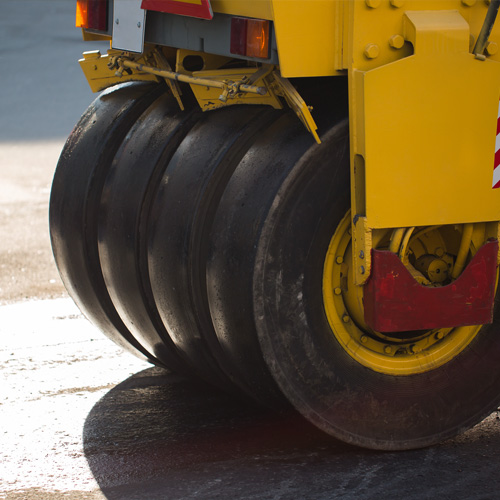
Rollers are designed to compact larger areas more efficiently. They cover more ground per pass and provide consistent compaction across wide surfaces.
Depending on the machine and application, rollers may be used on soil, aggregate, or asphalt.
Common applications include:
- Road construction and repair
- Parking lots
- Commercial developments
- Site preparation
- Asphalt paving
- Large driveways
- Aggregate base installation
- Municipal projects
Single-drum rollers are commonly used for soil and aggregate compaction. Double-drum, or tandem, rollers are often used for asphalt and other paved surfaces.
Larger rollers provide greater productivity, but the machine must still be matched to the material, required compaction depth, and available working space.
COMPARE YOUR COMPACTION EQUIPMENT OPTIONS
PLATE COMPACTOR
Best suited for:
- Granular soils
- Sand, gravel, and crushed stone
- Asphalt patching
- Pavers, sidewalks, and driveways
- Small- and medium-sized work areas
Primary advantages:
- Easy to maneuver
- Versatile across several applications
- Available in forward and reversible configurations
- Effective in areas that are too small for a roller
RAMMER
Best suited for:
- Cohesive soils such as clay and silt
- Trenches
- Footings
- Foundations
- Narrow or confined spaces
Primary advantages:
- Concentrated impact force
- Effective on cohesive material
- Compact footprint
- Easy to position around obstacles
ROLLER
Best suited for:
- Large, open areas
- Asphalt surfaces
- Soil and aggregate bases
- Roads and parking lots
- Commercial and municipal projects
Primary advantages:
- Greater surface coverage
- Consistent compaction across wide areas
- Higher productivity on larger jobs
- Multiple drum configurations for different applications
FACTORS TO CONSIDER BEFORE CHOOSING
The size of the project is important, but it should not be the only factor in your decision. Before selecting compaction equipment, consider:
- Soil or material type
- Moisture level
- Required compaction depth
- Size and shape of the work area
- Number of passes required
- Access limitations
- Surface slope
- Project specifications
- Operator experience
- Transportation requirements
Using a larger machine does not automatically produce better results. A roller may be inefficient in a narrow trench, while a rammer would take too long to compact a large parking lot.
The goal is to match the machine’s compaction force, size, and operating method to the application.
TRUSTED COMPACTION EQUIPMENT BRANDS
McCann Industries carries compaction equipment from established manufacturers serving professional construction applications.
Our product selection includes:
- Wacker Neuson plate compactors, reversible plates, rammers, and rollers
- Husqvarna compaction equipment designed for professional construction and hardscape applications
- BOMAG rollers and compaction equipment for asphalt, soil, and aggregate projects
- DEWALT compaction solutions designed for demanding jobsite use
Equipment availability and configurations may vary by location. The McCann team can help identify the right model based on your application and project requirements.
PURCHASE OR RENT?
Purchasing may make sense when compaction equipment will be used regularly across multiple projects. Ownership provides consistent access to the machine and may lower the cost per use over time.
Renting may be a better option when:
- The equipment is needed for a short-term project
- The required machine changes from job to job
- You want to avoid storage and transportation costs
- You need additional equipment during a busy period
- You want to evaluate a machine before purchasing
McCann Industries offers both equipment sales and rental options, allowing you to select the approach that works best for your operation and budget.
FIND THE RIGHT COMPACTION EQUIPMENT AT McCANN INDUSTRIES
Whether you are preparing a residential foundation, installing pavers, repairing asphalt, or building a commercial parking lot, McCann Industries can help you select the right compaction equipment for the job.
Our team will consider your material, application, project size, and operating conditions before recommending a solution. We also provide parts, maintenance, and repair support to help keep your equipment productive after it reaches the jobsite.
Contact McCann Industries to learn more about available plate compactors, rammers, and rollers from Wacker Neuson, Husqvarna, BOMAG, and DEWALT.