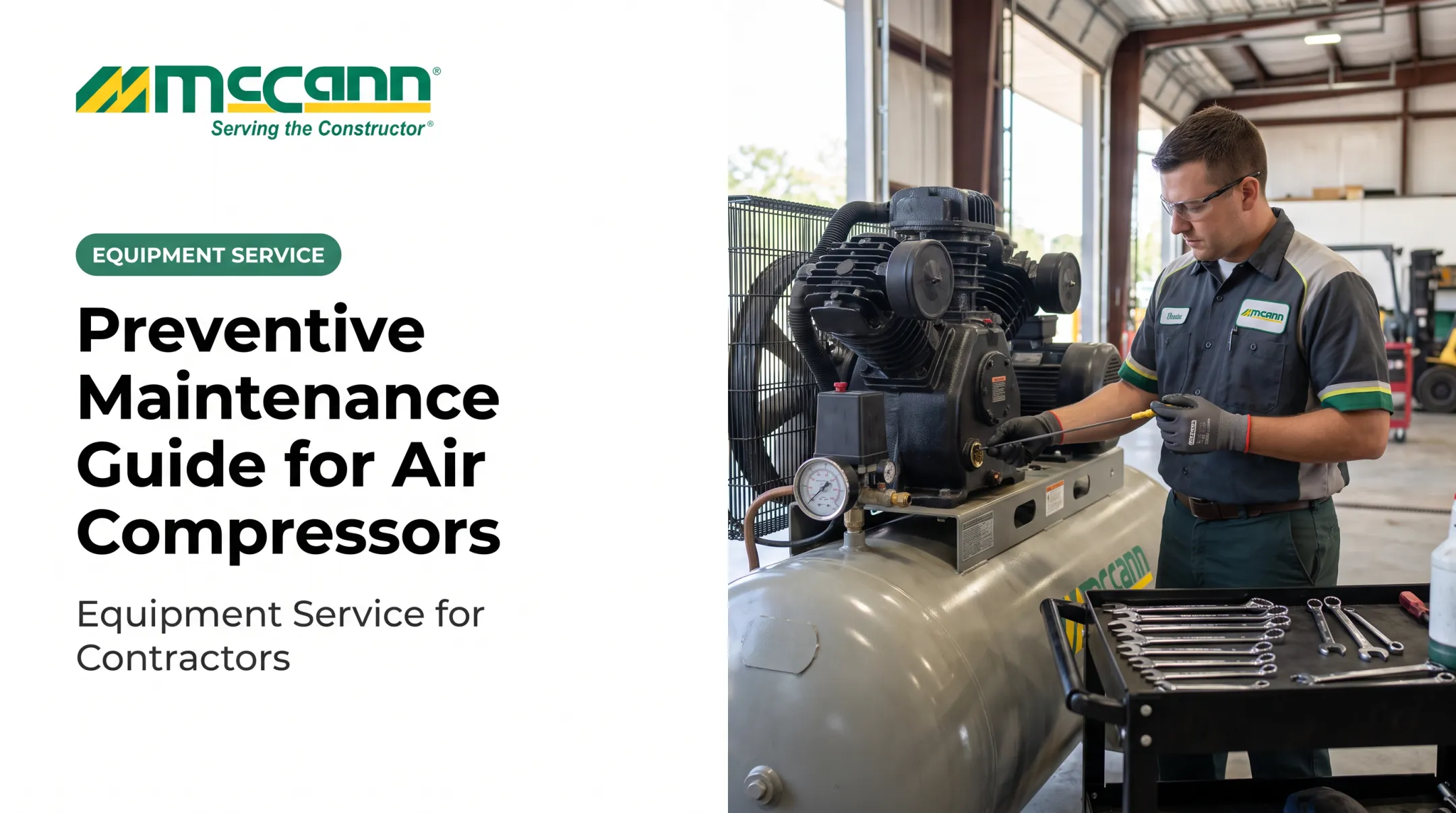
Keeping your excavators, loaders, and compactors running requires more than just fuel. It involves a consistent strategy of inspections, cleaning, servicing, and adjustments. This guide provides practical tips on how to build a maintenance program that reduces downtime, protects your operators, and keeps your projects on schedule.
Key Takeaways
- Preventive maintenance is your first line of defense, identifying wear, leaks, and other issues before they cause a breakdown.
- A strong program combines daily operator inspections with manufacturer-recommended servicing and qualified technician repairs.
- Effective schedules consider engine hours, workload, and operating environment, not just the calendar.
- Detailed service records, trained operators, and a clear process for reporting issues are essential for consistency and reducing delays.
Why Maintenance of Construction Equipment Is Important
Regular maintenance is a direct investment in uptime and profitability. When excavators, loaders, and material handlers stay reliable, time-sensitive schedules hold and crews keep working.
Clean filters, correct fluid levels, proper lubrication, and sound hydraulic systems drive day-to-day performance. The same habits also protect asset life, jobsite safety, and repair budgets.
Extend Equipment Life and Protect Resale Value
Planned inspections and timely component replacement extend useful life and push out major capital replacement. A machine with complete service history also holds more value at trade-in or sale. According to guidance from Caterpillar, maintaining equipment and keeping detailed service records helps preserve its condition and supports higher resale value by giving buyers more confidence.
Ensure Safety and Compliance
Defective equipment is a major safety hazard. Failing brakes, damaged hydraulic lines, faulty safety guards, or worn undercarriages can cause serious accidents. Regular inspections catch those risks before they reach the jobsite.
OSHA also sets equipment-condition rules, including standards for braking systems on earthmoving equipment. Proactive maintenance keeps you aligned with those requirements.

Avoid the High Cost of Reactive Repairs
While it's tempting to put off maintenance to keep a machine running, the cost of an unexpected failure is almost always higher. Reactive repairs involve:
- Emergency labor rates and overtime
- Expedited shipping for parts
- Idle crews and supervisors
- Rental equipment to cover the gap
- Disrupted schedules and possible project penalties
Left alone, a small fault often spreads into secondary damage. Planned maintenance lets you schedule downtime on your terms and keep repair spend predictable.
Types of Maintenance for Construction Equipment
An effective maintenance program doesn't rely on a single strategy. Instead, it blends several approaches to balance reliability, cost, and machine availability.
Routine / Preventive Maintenance
Preventive maintenance (PM) is the foundation of any good strategy. It involves scheduled tasks—inspections, cleaning, lubrication, fluid changes, and filter replacements—performed before a failure occurs.
Common PM tasks include:
- Checking engine oil, coolant, and hydraulic fluid levels
- Inspecting for leaks
- Cleaning debris from air intakes and radiators
- Lubricating pivot points and joints
- Inspecting belts, hoses, batteries, and attachments
- Checking tire condition or track tension
These tasks should always follow the manufacturer's owner’s manual. Intervals may need to be shortened for harsh dust, mud, or temperature conditions.
For contractors in Chicagoland and Northern Indiana, McCann offers Preventative Maintenance Packages that bundle OEM-specified tasks, genuine parts, and factory-trained technicians so equipment gets the right service at the right time.
Corrective / Reactive Maintenance
Corrective maintenance is performed to repair a known defect found during an inspection. Reactive maintenance, or breakdown maintenance, happens after the equipment has already failed.
Some corrective repairs are unavoidable, but leaning on a reactive approach is risky. It often causes:
- Longer downtime
- Collateral damage to related components
- Unsafe operating conditions
When an inspection finds a problem, pull the machine from service for a planned corrective repair. That is usually safer and more cost-effective than waiting for a failure.
Predictive / Condition-Based Maintenance
This advanced approach uses data to predict when service is needed. Instead of relying on a fixed schedule, condition-based maintenance (CBM) monitors the actual state of the equipment through:
- Fluid analysis
- Vibration and temperature sensors
- Diagnostic fault codes
- Operator reports
Monitoring trends can reveal gradual deterioration in an engine, transmission, or hydraulic system long before it fails. For example, oil and wear analysis can identify developing problems by examining fluid samples for contaminants and wear particles.
Tools like GPS fleet telematics and McCann's optional Systemgard® Lubrication Analysis provide the data needed for a CBM strategy, allowing you to prioritize service for high-value or mission-critical machines.
Major / Overhaul Maintenance
Major maintenance covers extensive work such as rebuilding an engine or transmission, or replacing an undercarriage. Shops typically plan it when:
- The machine hits a high operating-hour threshold
- Failures keep recurring despite normal repairs
- A rebuild costs less than ongoing fixes or full replacement

How to Check If Construction Equipment Needs Maintenance
Your operators are the first line of defense. Daily walk-arounds and paying attention to how a machine feels and sounds are the best ways to catch problems early. Operators should be trained to spot warning signs and report them immediately.
Performance or Output Changes
A drop in performance is a clear signal the machine needs attention.
- Symptoms: Slower cycle times, loss of power, reduced digging or lifting force, overheating, or difficulty starting
- Potential Causes: Clogged filters, low fluid levels, hydraulic issues, fuel delivery problems, or engine trouble
- Action: Document the symptom, operating conditions, and any warning codes, then report it for diagnosis
Unusual Behavior or Operation
Machines should operate smoothly and predictably. Any sudden change is a red flag.
- Symptoms: Abnormal noises (grinding, squealing), excessive vibration, strange smells (burning oil, electrical), jerky movements, or unexpected shutdowns
- Potential Causes: Worn bearings, loose parts, misalignment, hydraulic contamination, or impending component failure
- Action: Stop the machine safely and report the issue immediately. Never operate equipment with compromised braking, steering, or hydraulic systems.
Visible Wear, Errors, or Irregularities
Many developing issues are visible long before they cause a failure.
- Symptoms: Fluid leaks, cracked hoses, damaged wiring, worn tires or tracks, cracks in the frame or attachments, or contaminated fluids
- Potential Causes: Worn seals, loose fittings, impact damage, or lack of lubrication
- Action: Take photos, note exact locations, and open a maintenance request so technicians can diagnose faster
Increased Resource Consumption
A sudden jump in fuel, oil, or hydraulic fluid use for the same workload is a sign of inefficiency—and often an early failure warning.
- Symptoms: Higher fuel burn, more frequent oil or hydraulic top-offs, worse economy at the same production rate
- Potential Causes: Leaks, excessive friction, restricted airflow, or internal wear
- Action: Log consumption against hours or output and schedule an inspection before losses turn into downtime
Recurring Issues or Downtime
Repeated “minor” failures, short-lived fixes, or the same fault code coming back usually mean the root cause is still open. Service history often shows the pattern.
- Symptoms: Recurring fault codes, temporary repairs that fail again, frequent unplanned stops
- Potential Causes: Incomplete diagnosis, wrong part replacement, or deeper system wear
- Action: Have a qualified technician run root-cause analysis and decide whether major repair, rebuild, or replacement is the most economical path

Construction Equipment Maintenance Schedule (General Guidelines)
Always follow the manufacturer's operation and maintenance manual for service intervals. Use this general schedule as a framework, and tighten frequencies for heavy use or harsh site conditions.
| Frequency | Key Maintenance Tasks |
|---|---|
| Daily / Pre-Use | Inspect for leaks, damage, and loose parts; check engine, hydraulic, and coolant levels; examine tires or tracks, attachments, and safety features (lights, alarms, brakes); record engine hours and report defects before operation |
| Weekly / Periodic | Clean debris from radiators, coolers, and air intakes; lubricate designated grease points; inspect hoses, belts, and batteries; check undercarriage components and track tension; confirm reported issues have work orders |
| Monthly / Quarterly | Replace air, fuel, and hydraulic filters as needed; inspect hydraulic and cooling systems, electrical connections, and structural components; verify fastener torque on critical parts; schedule technician inspections for heavily used machines |
| Annual / Long-Term | Complete OEM fluid and filter changes; perform calibrations; run fluid analysis for internal wear; plan major component overhauls or replacements using condition and total cost of ownership |
Low-use equipment still requires periodic checks for battery health, fluid degradation, and corrosion. Clearly assign each task to operators, supervisors, or technicians.
When you need a qualified inspection, diagnosis, or scheduled service, contact McCann to schedule equipment service. Factory-trained technicians can coordinate next steps at one of our 10 locations or on your jobsite.
Keep Your Jobsite Running Smoothly
Equipment maintenance is an uptime strategy. Consistent inspections and planned servicing catch problems early, protect operators, and keep machines productive on the job.
Pair OEM guidance with trained operator reporting, condition-based data, and qualified service support—including preventative maintenance and on-site repair when you need it—and you build a fleet that stays ready instead of sitting idle.
Frequently Asked Questions
What is construction equipment maintenance?
Construction equipment maintenance is the inspection, servicing, cleaning, adjustment, and repair work that keeps machines safe, reliable, and productive. Solid programs also document every check and service event.
What are the main types of maintenance for construction equipment?
Most fleets use four approaches: preventive work on a schedule, corrective or reactive repairs after a fault, predictive service driven by operating data, and major overhauls that rebuild engines, transmissions, or other core systems.
What are common preventive maintenance tasks for construction equipment?
Daily pre-use inspections, fluid and leak checks, lubrication, filter service, and debris cleaning are the core tasks. Also inspect undercarriages, tires, attachments, and safety systems on a set cadence.
What is the typical maintenance schedule for construction equipment?
Use the manufacturer’s manual as the baseline: daily operator checks, periodic inspections such as weekly walk-arounds, and major service by operating hours or calendar time. Tighten those intervals for harsh jobsites and heavy workloads.
How much does equipment maintenance cost?
Costs vary by machine age, type, usage, parts, and labor rates—there is no single industry price. Build the budget from your fleet’s service history and OEM requirements instead of generic averages.
What are the general requirements for equipment maintenance?
Follow OEM instructions, use trained people and safe procedures, and stick to the correct parts and fluids. Run regular inspections, keep accurate records, and fix safety-critical defects immediately.