

CONSTRUCTION EQUIPMENT SAFETY BEST PRACTICES FOR A SAFER, MORE PRODUCTIVE JOBSITE
Construction equipment plays a critical role in completing projects efficiently, but heavy machinery can also introduce serious hazards when it is not operated, inspected, or maintained properly. Whether crews are using excavators, skid steers, compact track loaders, wheel loaders, forklifts, compaction equipment, or other machinery, following construction equipment safety best practices can help protect workers, reduce downtime, and keep projects on schedule.
At McCann Industries, we understand the importance of safety, reliability, and productivity on every jobsite. We provide new, used, and rental equipment along with construction supplies, safety products, parts, maintenance, repairs, and product support. Our knowledgeable team helps contractors identify dependable equipment and practical solutions for their project needs.
WHY CONSTRUCTION EQUIPMENT SAFETY MATTERS
Construction sites are demanding work environments where heavy equipment often operates near workers, vehicles, materials, structures, and changing ground conditions. Improper equipment use can lead to injuries, machine damage, property damage, and costly project delays.
Creating a strong culture of construction equipment safety starts with properly trained operators, regular equipment inspections, clear jobsite procedures, and access to dependable machinery. Prioritizing construction equipment safety can provide several benefits, including:
- Fewer workplace injuries and equipment-related incidents
- Improved jobsite efficiency and productivity
- Reduced equipment damage and repair costs
- Better compliance with applicable safety requirements
- Greater confidence among operators and crew members
- Less unplanned equipment downtime
ESSENTIAL CONSTRUCTION EQUIPMENT SAFETY TIPS
CONDUCT PRE-OPERATION EQUIPMENT INSPECTIONS
Before construction equipment is used, the operator should complete a pre-operation inspection. Routine equipment inspections can help identify wear, damage, leaks, and other concerns before they result in equipment failure or a jobsite incident.
Equipment should not be operated when a critical safety issue has been identified. The concern should be reported and corrected according to company procedures and manufacturer recommendations.
Important inspection areas may include:
- Tires, tracks, and undercarriage components
- Hydraulic hoses, cylinders, and fittings
- Fluid levels and visible leaks
- Safety guards and protective structures
- Lights, mirrors, cameras, alarms, and warning systems
- Brakes, steering, and operating controls
- Steps, handholds, and access points
- Attachments and connection points
- Seat belts and operator restraints
Inspection requirements vary by machine. Operators should always follow the equipment manufacturer’s inspection procedures.
ENSURE OPERATORS ARE PROPERLY TRAINED AND AUTHORIZED
Only properly trained, qualified, and authorized personnel should operate construction equipment. Operators must understand the machine’s controls, safety features, load limits, operating characteristics, and manufacturer instructions before beginning work.
Operator training should also address the hazards associated with the specific jobsite. Conditions such as slopes, overhead utilities, underground hazards, limited visibility, soft ground, pedestrian traffic, and confined operating areas can affect how equipment should be used.
Proper training helps operators:
- Recognize potential equipment and jobsite hazards
- Follow manufacturer operating instructions
- Understand machine capacity and application limits
- Use attachments correctly
- Respond appropriately to emergencies
- Maintain safe operating speeds and procedures
Training requirements depend on the equipment, application, employer policies, and applicable regulations.
WEAR APPROPRIATE PERSONAL PROTECTIVE EQUIPMENT
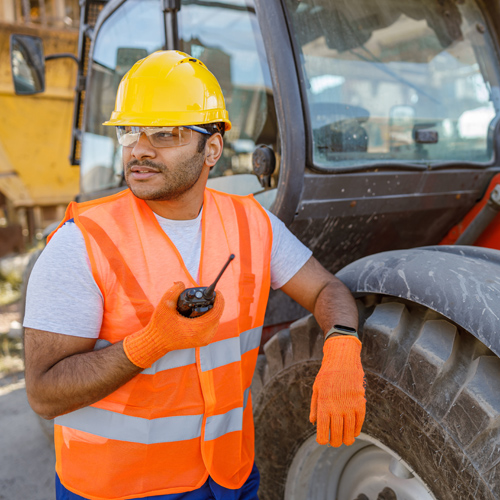
Equipment operators and employees working around heavy machinery should wear the personal protective equipment required for the job and work environment. PPE provides an additional layer of protection but does not replace proper training, equipment inspections, or safe operating procedures.
Depending on the jobsite, required PPE may include:
- Hard hats
- High-visibility clothing
- Safety glasses or face protection
- Safety-toed boots
- Hearing protection
- Work gloves
- Respiratory protection
- Fall-protection equipment
Employers should evaluate jobsite hazards and determine which PPE is required for each task.
MAINTAIN CLEAR JOBSITE COMMUNICATION
Clear communication is essential when multiple crews, vehicles, and machines are working in the same area. Operators may have significant blind spots, and nearby workers may not always know when equipment is moving or changing direction.
Radios, hand signals, spotters, designated traffic routes, and pre-job meetings can improve coordination and help reduce confusion. Everyone on the jobsite should understand the communication procedures before work begins.
Effective communication can reduce the risk of:
- Equipment collisions
- Struck-by incidents
- Blind-spot accidents
- Material-handling errors
- Workers entering active equipment zones
- Confusion during backing or lifting operations
When a spotter is used, the operator and spotter should agree on signals before work begins. The operator should stop the machine if visual or radio contact with the spotter is lost.
ESTABLISH EQUIPMENT OPERATING ZONES
Pedestrians and heavy equipment should be separated whenever possible. Clearly marked operating areas, exclusion zones, walkways, and equipment routes help employees understand where machines will be moving.
Workers should avoid standing near operating equipment, beneath raised attachments, or between a machine and a fixed object. Operators should confirm that the area is clear before moving, backing, swinging, lifting, or lowering equipment.
COMMON CONSTRUCTION EQUIPMENT HAZARDS
EQUIPMENT ROLLOVERS
Rollovers are among the most serious construction equipment hazards. They can occur when equipment is operated on unstable ground, steep slopes, near trenches, or with an elevated or unbalanced load.
Construction equipment safety practices for reducing rollover risks include:
- Assessing slopes and ground conditions before operating
- Staying away from unsupported trench edges and drop-offs
- Operating within manufacturer load and slope limits
- Avoiding excessive speeds and sudden turns
- Keeping loads as low as practical during travel
- Using seat belts and rollover protective structures
- Selecting equipment that is appropriate for the terrain
Operators should never assume that a surface is stable based only on its appearance.
STRUCK-BY AND CAUGHT-BETWEEN INCIDENTS
Workers can be seriously injured when they enter an equipment operating zone or stand between moving machinery, materials, and fixed objects. These incidents are especially dangerous when operators have limited visibility.
Best practices include:
- Establishing designated equipment exclusion zones
- Using spotters when visibility is limited
- Keeping employees clear of active machinery
- Following established jobsite traffic patterns
- Making eye contact with operators before approaching
- Avoiding work beneath raised loads or attachments
- Using alarms, cameras, mirrors, and warning devices as intended
Workers should approach equipment only after receiving clear acknowledgment from the operator.
OVERHEAD AND UNDERGROUND UTILITIES
Power lines, gas lines, water lines, communication lines, and other utilities can create significant hazards for equipment operators. Contact with an overhead power line or underground utility can result in injuries, service interruptions, and extensive damage.
Before work begins, contractors should identify applicable utility locations, establish required clearances, and communicate known hazards to operators and crews. Equipment attachments, booms, and raised loads must remain within established safe operating areas.
EQUIPMENT MALFUNCTIONS
Poorly maintained equipment may experience mechanical failures that affect safe operation. Worn brakes, damaged hydraulic hoses, faulty alarms, fluid leaks, and attachment problems should be addressed before the equipment returns to service.
Preventive maintenance and regular inspections can help identify developing issues before they become larger safety or repair concerns.
CONSTRUCTION EQUIPMENT MAINTENANCE AND SAFETY
Preventive maintenance is an important part of construction equipment safety. Following manufacturer service intervals can help maintain dependable performance and reduce unexpected failures.
Routine construction equipment maintenance may include:
- Fluid and filter service
- Hydraulic system inspections
- Tire and track inspections
- Brake and steering evaluations
- Battery and electrical system checks
- Alarm, lighting, and camera inspections
- Attachment and coupler inspections
- Wear analysis
- Scheduled machine inspections
McCann Industries supports customers with equipment parts, preventive maintenance, shop repairs, field service, and product support. Service capabilities and availability may vary by location.
CONSTRUCTION SAFETY SUPPLIES AND JOBSITE EQUIPMENT
A safer jobsite requires more than reliable heavy equipment. Contractors also need access to appropriate safety products, tools, traffic-control items, and jobsite supplies.
McCann Industries provides construction supplies and safety products that can help contractors prepare their crews and organize their jobsites. Product availability may include personal protective equipment, high-visibility products, traffic-control supplies, fall-protection products, concrete and masonry tools, fasteners, and other construction essentials.
Using a trusted source for construction equipment, supplies, parts, and service can help contractors simplify purchasing and keep necessary products available throughout the project.
SAFETY BENEFITS OF RENTING CONSTRUCTION EQUIPMENT
For many contractors, renting construction equipment provides operational flexibility and access to professionally maintained machinery. Construction equipment rental can be useful for temporary workload increases, specialized applications, or projects that require equipment outside a contractor’s regular fleet.
ACCESS TO CURRENT EQUIPMENT
Rental fleets may provide access to newer machines with updated operating controls, visibility features, cameras, alarms, operator restraints, and other equipment technology.
Operators must still be trained on the specific machine before use. Controls, capacities, and safety features can vary between manufacturers and models.
REDUCED MAINTENANCE RESPONSIBILITIES
Equipment ownership requires ongoing maintenance, inspections, repairs, storage, and recordkeeping. Renting allows contractors to use equipment maintained by the rental provider while focusing their internal resources on the project.
Daily inspections and proper operation remain the responsibility of the customer and operator during the rental period.
IMPROVED EQUIPMENT FLEXIBILITY
Projects may require specialized equipment for a limited period. Renting can help contractors select equipment that better matches the application instead of attempting to complete the work with an undersized or unsuitable machine.
Using the appropriate equipment can improve productivity and reduce risks associated with operating machinery outside its intended application.
DEPENDABLE PRODUCT SUPPORT
McCann Industries maintains and inspects its rental equipment to support dependable performance. If an equipment issue occurs, customers have access to local support from people who understand the machines and the importance of minimizing jobsite downtime.
Equipment availability, rental inventory, and support services vary by McCann Industries location.
BUILD A STRONG CONSTRUCTION EQUIPMENT SAFETY CULTURE
Construction equipment safety is not based on one inspection, policy, or training session. It requires consistent attention from company leaders, supervisors, operators, and every employee working around heavy machinery.
A strong safety culture includes:
- Regular operator training
- Daily equipment inspections
- Clear jobsite communication
- Consistent enforcement of operating procedures
- Preventive equipment maintenance
- Prompt reporting of hazards and equipment concerns
- Planning for changing jobsite conditions
Operators should always follow manufacturer instructions, employer safety policies, and applicable regulations. When employees are encouraged to identify hazards and stop work when conditions are unsafe, construction equipment safety becomes part of the daily operation.
PARTNER WITH McCANN INDUSTRIES
Construction equipment safety starts with proper planning, trained operators, routine inspections, clear communication, and dependable machinery. Whether you are managing a large commercial project, utility installation, road construction operation, concrete job, or smaller construction project, choosing the right equipment and support partner can make a meaningful difference in safety and productivity.
McCann Industries provides new and used equipment, construction equipment rentals, contractor supplies, safety products, parts, maintenance, repairs, and product support. Contact McCann Industries to learn more about the construction equipment, supplies, and services available for your next project.
Equipment, products, rentals, training resources, and service capabilities may vary by location.